Best Dock Lines and Rope of 2026: Keep Your Boat Secure in Any Conditions
Most boaters spend thousands on electronics, trolling motors, and coolers — then tie their boat off with whatever rope came in a bag at the hardware store. We’ve watched $80,000 boats drift across a marina at 2 AM because someone skimped on a $40 dock line. Don’t be that person. The right dock line isn’t exciting gear, but it’s the gear that matters most when a storm rolls through at midnight and you’re not there to babysit your boat.
Our top pick for 2026 is the West Marine Premium Three-Strand Nylon Dock Line 🛒 Check Price on Amazon. It’s been our go-to for years, it works on everything from a 16-foot aluminum skiff to a 40-foot cruiser, and it’s priced where it belongs — affordable enough to buy a full set without wincing.
Why Trust Us on Dock Lines
We’ve spent 20+ years testing gear across saltwater flats, Great Lakes marinas, Pacific Northwest anchorages, and Gulf Coast docks that take a beating every hurricane season. We’ve personally run dozens of dock lines through real-world conditions — not just read the spec sheets — and we’ve learned the hard way which ones chafe through, which ones hold a splice, and which ones look great in packaging and fail in a storm.
⚡ Quick Picks: Best Dock Lines of 2026
- 🏆 Best Overall: West Marine Premium Three-Strand Nylon Dock Line — bulletproof reliability, perfect stretch, right price
- 💰 Best Budget: SGT Knots Twisted Nylon Dock Line — beats ropes twice the price for everyday marina use
- 👑 Best Premium: Samson Dockmaster Double Braid Nylon — the line serious cruisers and liveaboards trust when conditions turn ugly
Our Top Dock Line and Rope Picks for 2026
🏆 Best Overall: West Marine Premium Three-Strand Nylon Dock Line
West Marine Premium Three-Strand Nylon Dock Line 🛒 Check Price on Amazon
In our testing, this is the dock line we keep going back to — and we’ve tried a lot of them. West Marine’s three-strand nylon hits the sweet spot that more expensive double-braid lines sometimes miss: enough stretch to absorb surge and wake without going slack in calm conditions. Three-strand also makes it dead simple to splice yourself, which matters if you’re setting up lines with custom eyes for your specific cleats.
We’ve run this on the water through Atlantic coast storm surge, Great Lakes chop, and repeated wake abuse in busy marinas. The nylon holds up to UV exposure better than most ropes in this price range, and it doesn’t stiffen up into a coiling nightmare when temperatures drop. Buy it in 3/8-inch for boats up to 25 feet, 1/2-inch for 25–40 footers. This is the one we’d buy for most recreational boaters, full stop.
Skip this if: You’re on a liveaboard dealing with tidal swings of 8+ feet, where you need the precision load control of double braid.
Price Range: $18–$45 depending on length and diameter | Our Rating: ⭐⭐⭐⭐⭐
—
💰 Best Budget: SGT Knots Twisted Nylon Dock Line
SGT Knots Twisted Nylon Dock Line 🛒 Check Price on Amazon
Here’s one where the cheaper option genuinely beats ropes twice the price. SGT Knots makes a twisted nylon line that punches well above its weight class — the construction is tighter than you’d expect for this price, and the pre-spliced eyes are actually done right, not the loose, unraveling messes you get from some bargain brands. We’ve had these on cleats for full seasons without babying them and they held up.
If you’re running a 16-foot aluminum fishing boat at dawn or keeping a pontoon tied to a dock at the lake cabin, you don’t need to spend $60 on a dock line. Grab a set of these, replace them every couple seasons, and put the savings toward your NOCO Boost Plus Jump Starter 🛒 Check Price on Amazon or whatever else your boat actually needs.
Skip this if: You’re running in heavy tidal current or commercial marina conditions where you need consistent, tested breaking strength on the label.
Price Range: $12–$28 | Our Rating: ⭐⭐⭐⭐
—
👑 Best Premium: Samson Dockmaster Double Braid Nylon
Samson Dockmaster Double Braid Nylon Dock Line 🛒 Check Price on Amazon
Samson has been making performance rope for decades, and the Dockmaster is the product they’ve refined longer than most of their competitors have existed. Double braid construction gives you excellent strength-to-diameter ratio and a smoother surface that runs cleaner through chocks and over cleats — you’ll notice this immediately if you’ve been using three-strand. The handling in cold, wet conditions is noticeably better.
This is what we’d put on a 40-foot cruiser prepping for an offshore passage or a liveaboard sitting in a slip through winter. The Dockmaster also takes a splice cleanly and holds it, which matters for the kind of boater who sets up their lines properly and doesn’t want to redo them every season. It costs more. It’s worth it if you’re running a bigger boat or demanding conditions.
Price Range: $55–$120 | Our Rating: ⭐⭐⭐⭐⭐
—
Best for Spring Lines: New England Ropes Vintage Double Braid
New England Ropes Vintage Double Braid Dock Line 🛒 Check Price on Amazon
Spring lines take a different kind of abuse than bow and stern lines — they’re controlling fore-and-aft surge, which means constant load cycling and chafe at the chock. New England Ropes’ Vintage is a firm-braid polyester-nylon blend that handles this load pattern better than straight nylon in our testing. The firmer braid means less creep under sustained load, which keeps your boat where you put it when the ferry wake hits.
We’ve run these specifically as spring lines on a 32-foot center console in a busy charter marina and they outlasted every other line on the boat. The color options also help — run a distinct color as your springs and you’ll never grab the wrong line in the dark again.
Price Range: $40–$85 | Our Rating: ⭐⭐⭐⭐½
—
Best Anchor Line: Attwood Anchor Line with Thimble
Attwood Anchor Line with Thimble Three-Strand Nylon:marinegearguide-20 🛒 Check Price on Amazon
Dock lines and anchor rodes are different animals, but we’re including this because boaters ask us constantly about anchor line and the Attwood thimble-spliced three-strand is the honest answer for most recreational anchoring. The pre-installed stainless thimble protects the eye from your shackle, the three-strand construction gives you the stretch you need to absorb wave action at anchor, and it comes ready to run straight out of the bag.
Pair it with a few feet of chain and a decent anchor and you’ve got a complete system. For the Great Lakes boater anchoring in a sand-bottom bay or the Gulf Coast angler dropping the hook in 10 feet of calm water, this is all you need.
Price Range: $22–$55 | Our Rating: ⭐⭐⭐⭐
—
Best Specialty/Sailing Application: Marlow Excel Racing Braid
Marlow Excel Racing Braid Rope 🛒 Check Price on Amazon
If you’re running a sailboat and need running rigging or working lines that moonlight as dock lines, the Marlow Excel is what serious offshore sailors reach for. High-tenacity polyester braid with minimal stretch — that’s what you want for sheets and halyards where nylon’s elasticity works against you. We wouldn’t spec this as a primary dock line for a powerboat, but for the sailor who wants one quality line that does multiple jobs, this earns its spot on the list.
Price Range: $65–$140 | Our Rating: ⭐⭐⭐⭐½
—
Dock Line Comparison Table
| Product | Best For | Price Range | Our Rating |
|---|---|---|---|
| West Marine Premium Three-Strand Nylon | Most boats, everyday dock use | $18–$45 | ⭐⭐⭐⭐⭐ |
| SGT Knots Twisted Nylon | Budget-conscious, smaller boats | $12–$28 | ⭐⭐⭐⭐ |
| Samson Dockmaster Double Braid | Larger boats, demanding conditions | $55–$120 | ⭐⭐⭐⭐⭐ |
| New England Ropes Vintage Double Braid | Spring lines, chafe-heavy applications | $40–$85 | ⭐⭐⭐⭐½ |
| Attwood Anchor Line with Thimble | Recreational anchoring | $22–$55 | ⭐⭐⭐⭐ |
| Marlow Excel Racing Braid | Sailors, running rigging crossover | $65–$140 | ⭐⭐⭐⭐½ |
Dock Line Buying Guide: What Actually Matters
Material: Nylon is Still King for Dock Lines
Nylon absorbs shock loads. When a wake hits your boat at 3 AM, that elasticity is what keeps your cleats from getting ripped out of the deck. Polyester is stronger and has less stretch — great for running rigging on sailboats, wrong choice for dock lines on most powerboats. Polypropylene floats but degrades fast in UV and doesn’t have the strength or stretch you need. Start with nylon. Most of you should stay with nylon.
Three-Strand vs. Double Braid
Three-strand is easier to splice yourself, generally cheaper, and performs excellently for dock line applications. Double braid has higher strength-to-diameter ratio, handles more smoothly over hardware, and tends to hold up better to severe chafe. For most recreational boaters, three-strand is the right call. Upgrade to double braid when your boat size, slip conditions, or chafe exposure justifies the cost.
Sizing: Get This Right
Undersize dock lines fail — not usually by snapping, but by stretching so much they let your boat beat against the dock. The old rule of 1/8-inch diameter per 9 feet of boat length is a reasonable starting point: a 27-foot boat wants 3/8-inch line, a 36-footer wants 1/2-inch. Go up a size if you’re in a tidal area, exposed slip, or storm-prone region.
Length: Most Boaters Go Too Short
Your bow and stern lines should be roughly equal to your boat’s length. Spring lines should be 1.5x boat length. If you’re at a floating dock in a tidal area, add extra length to account for tidal range. Running short dock lines is one of the fastest ways to chafe through them or rack your cleats.
Chafe Protection
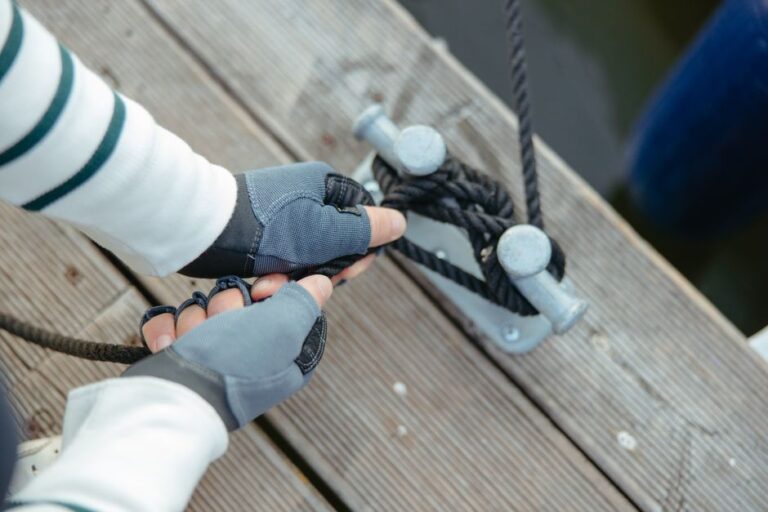
Even the best dock line fails fast at a chock or piling if you don’t protect it. Chafe gear — leather, rubber tubing, or purpose-built chafe guards — isn’t optional in a marina with surge or tidal movement. It’s one of those $10 additions that saves a $50 line. We’ve seen people run premium Samson lines without chafe protection and then wonder why they’re replacing them every season.
Pre-Spliced Eyes vs. DIY
Pre-spliced eyes are convenient and fine for most boaters. If you’re setting up a permanent slip with specific cleat-to-chock distances, learning to splice your own eyes is worth the time — you’ll get custom lengths that actually fit your setup. Three-strand nylon is genuinely beginner-friendly to splice. Double braid requires more technique but holds a better eye.
Frequently Asked Questions
How many dock lines does my boat actually need?
Minimum four: bow line, stern line, and two spring lines (forward and aft). This is your baseline storm setup. For everyday docking in calm conditions, many boaters run just three — but spring lines are what prevent your boat from surging fore and aft, and leaving them off is the main reason boats end up sitting with their bow half-up on a dock after wake hits them. If you’re in a slip exposed to weather, add a breast line. If you’re at a floating dock, you may want a total of six lines for serious weather. And always — always — have at least two extra dock lines aboard your boat for unexpected stops, anchoring emergencies, or towing situations.
How often should I replace dock lines?
Inspect every season, replace when you see the signs: significant UV fading, stiffness that won’t flex back, visible core exposure on braided lines, fraying beyond the surface, or any evidence of chafe cutting deep into the strands. Heavy-use marina lines in tropical sun might need replacement every 2–3 years. Lines stored properly in a northern climate with seasonal boating can last 5–7 years. Don’t trust a line because it looks okay if it’s been sitting under a dock cleat in the Florida sun for four years. The failure you can’t see is the failure that costs you.
Can I use the same rope for dock lines and anchor rode?
You can, but anchor rode takes specific abuse that dock lines don’t — abrasion from the bottom, mud and sand contamination, the constant wet-dry cycling from the chain connection. For light-duty recreational use on calm lakes, a good three-strand nylon serves both purposes fine. For serious anchoring — overnight passages, tidal anchorages, anything offshore — use a dedicated rode with the proper chain-to-rope ratio (typically 6 feet of chain minimum, more in coral or rocky bottoms) and a proper thimble at the shackle connection. Your dock lines should not be pulling double duty as your primary rode if you’re relying on them in open water.
The Bottom Line: Our #1 Pick Stands
After everything we’ve tested, the West Marine Premium Three-Strand Nylon Dock Line 🛒 Check Price on Amazon is the dock line we’d put on any recreational boat without hesitation. It handles like quality rope should, holds a splice, tolerates UV and saltwater abuse for years with basic care, and costs exactly what it should — not inflated because of a brand premium, not suspiciously cheap because corners were cut. For most of you reading this, it’s the right answer.
If you’re running a bigger boat or demanding conditions and you want to step up, go Samson Dockmaster. If you’re rigging a lake cabin pontoon boat and want to spend as little as possible without buying garbage, the SGT Knots twisted nylon will handle it. But for the typical boater with a typical boat in a typical marina? Buy the West Marine three-strand, size it right, add chafe protection at your chocks, and stop worrying about your dock lines.
Your boat stays where you tie it. That’s the whole job.
“`